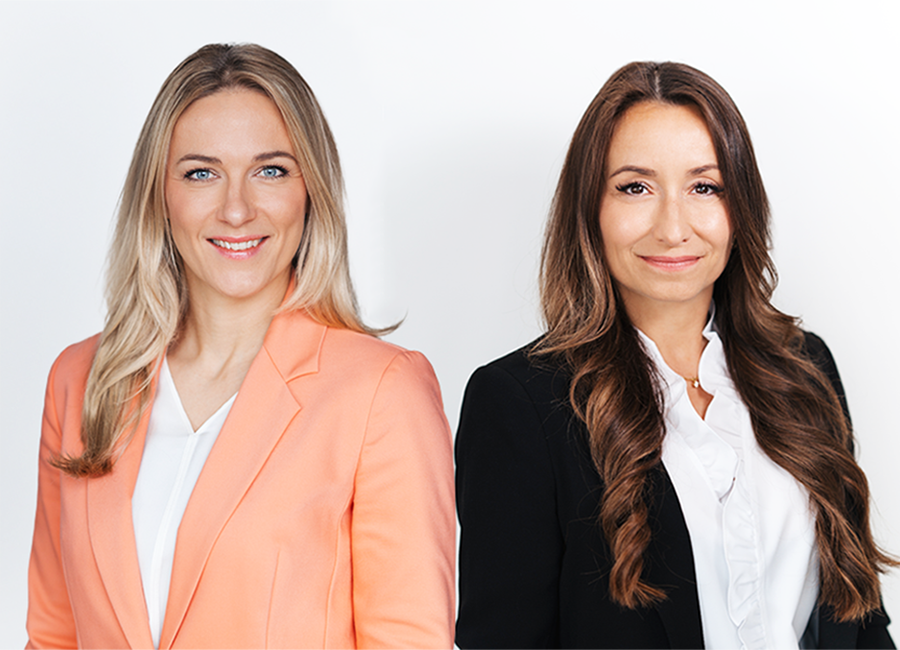
2025 was a challenging year—and a year of professionalization. Many small and medium-sized enterprises (SMEs) refined their business models, adjusted their financing strategies, and tackled technological change more actively than in previous years. We talk to enomyc founders Martin Hammer and Uwe Köstens about key developments and what will be crucial for SMEs in 2026.
Mr. Hammer, how do you look back on the year 2025?
Martin Hammer: 2025 was a year that demanded a great deal of adaptability. Markets were volatile, supply chains and geopolitical issues accelerated decision-making, and the financing situation remained challenging. At the same time, we saw many medium-sized companies use this phase to further develop their structures and operations. What is particularly clear to me is that the quality of planning, reporting, and risk management has noticeably increased. That makes me confident about 2026.
Mr. Köstens, in your opinion, what were the greatest challenges for small and medium-sized enterprises?
Uwe Köstens: The biggest challenge was unpredictability. Entrepreneurs had to reevaluate decisions more frequently and act more quickly in terms of tactics. Nevertheless, this phase has yielded important insights: Strategic rigidity no longer works—scenarios, flexible budgets, and clear prioritization have become key management tools. This is a development that will benefit small and medium-sized enterprises in the long term.
How has this changed the consulting business?
Martin Hammer: We are seeing a shift that I very much welcome. Many entrepreneurs are now coming to us much earlier—not only when they are in crisis, but already when structural changes are foreseeable. The topics are shifting toward financing, performance management, and transformation. Private debt is becoming increasingly relevant, especially for medium-sized companies that need flexible structures. We are therefore systematically expanding our network of mid-market direct lenders. At the same time, technology is playing an increasingly important role. AI is changing analysis, decision-making, and processes—not only for us, but above all in the companies themselves.
What development has been particularly significant for enomyc itself?
Martin Hammer: One of the most important developments is our internationalization, especially our location in the US. Many German SMEs have production or sales units there, and we can now support them much more comprehensively.
We have also strengthened our teams internally: financing, transformation, and preventive restructuring have grown significantly—because these topics are in high demand in the market.
What do you think will be crucial for entrepreneurs in 2026?
Martin Hammer: 2026 will be a year of setting the course. Entrepreneurs will have to make clear decisions—in financing, in operating models, and in investments in technology. It is particularly important that CFOs and CEOs focus on capital efficiency and financial stability. At the same time, technological developments are opening up enormous opportunities for productivity and transparency. Those who invest now will gain an advantage.
Mr. Köstens, what specific options do entrepreneurs have?
Uwe Köstens: More than many people think. Early warning systems and scenarios greatly enhance the ability to act. Preventive restructuring in accordance with IDW S 16 and StaRuG gives entrepreneurs the opportunity to address risks at an early stage—while they are still in good health and without a crisis scenario. Operational excellence is another key factor. In 2025, many entrepreneurs began to streamline and automate their processes to a greater extent. This will be an important value driver in 2026. And thirdly: talent and organization. Companies that modernize their management and decision-making structures are significantly faster and more resilient.
Mr. Hammer, where do you see the greatest opportunities for 2026?
Martin Hammer:
In three areas.
First: technology, especially AI. It enables a speed and quality of decision-making that was previously unheard of.
Second: M&A. We see attractive opportunities for well-prepared medium-sized buyers.
And third: internationalization. Companies that have a global presence or are on their way to achieving one will have particular opportunities to gain market share in 2026. Many companies will have done their homework by 2025 – and that will open up real scope for creativity in 2026.
Mr. Köstens, what advice would you give entrepreneurs at the start of the year?
Uwe Köstens: 2026 is the year that will determine how strong companies will be in the coming years. My advice is therefore: plan realistically, manage actively, and use your leverage consistently. I don't expect an immediate turnaround, but structural stabilization is possible—if the right course is set now. Entrepreneurs who start early will have a clear competitive advantage.
Thank you very much for talking to us.